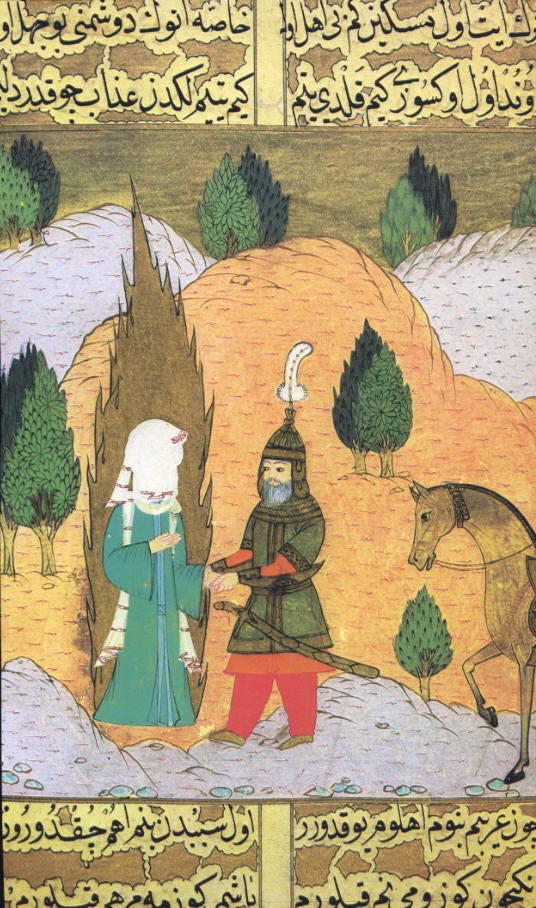
The Doctor
A summary of Arshi's commentary on Masnavi 1.23–24 (plus additional notes)

shād bāsh ay ishq-e khūsh sodā-yi mā
ay tabīb-e jumle illat-hā-yi mā
ay davā-yi nikhvat-o-nāmūs-e mā
ay to aflātūn-o-jālīnūs-e mā
The first couplet has been translated as follows:
Hail, our sweet-thoughted love—thou that art physician of all our ills.
It can also be translated as follows:
O love! which is our good madness. O doctor of everything that ails us! Be well.
The second couplet has been translated as follows:
The remedy of our pride and vainglory, our Plato and our Galen!
The expression “ishq-e khūsh sodā” is delightful. Because love is so plentiful, it cannot be contained and it subsumes reason. That is because sodā (madness) is the deficiency of reason but the perfection of love. In other words, reason has not been discarded; it has been enveloped by love.
Love is a doctor because it leads to purification, curing all illnesses in the soul. It is such a complete manifestation of ḥaqq (truth and reality) that it leaves no room for deficiency. While love is the cure for everything that ails us, Rumi mentions arrogance (nikhvat) and enjoying being respect by others (nāmūs) in particular because these are often the sources of other vices. After all, it was Satan’s sin. Love cures these two diseases in particular.
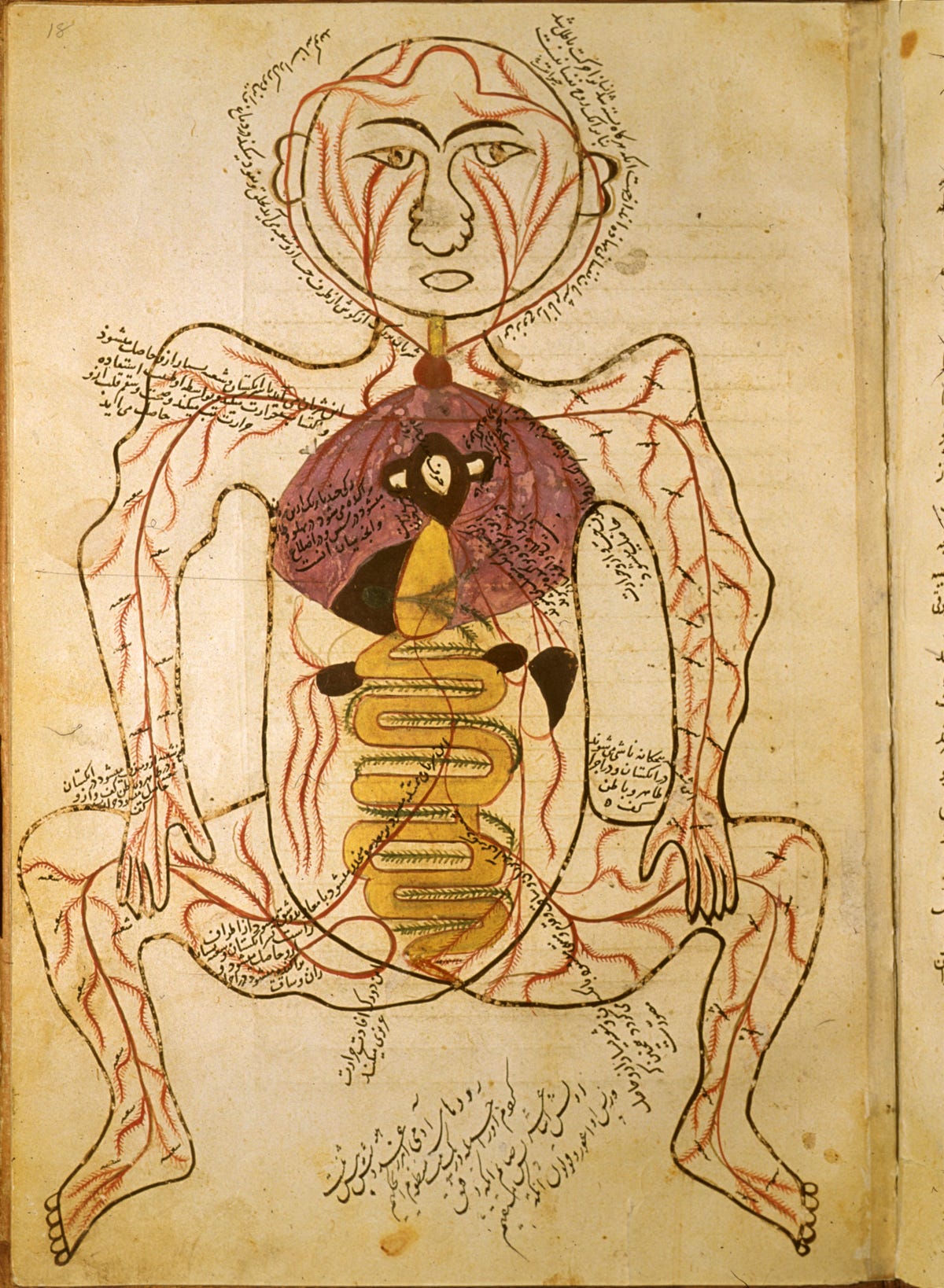
The soul has three basic components: dhihn (mind); irāda (will); and ṭabīʿat (nature). The most fundamental illness is arrogance. One aspect of this illness manifests in the mind and the other manifests in one’s nature; will is not a “place.” Nikhvat is the manifestation of arrogance in the mind and nāmūs (i.e. ḥamiyyat-e jāhiliyya) is the manifestation of arrogance in one’s nature. This interpretation is justified by the fact that love is “our Plato and our Galen,” which paralles “our pride and vainglory” (nikhvat-o-nāmūs-e mā). Plato represents the cure for our mind (philosophy) and Galen represents the cure for our nature (medicine). Love is the cure for all our spiritual and ethical diseases, which cannot be cured by either ethicists or physicians.
According to Arshi, Plato is the imam of the Islamic philosophical tradition known as Illumination (ishrāq), meaning those philosophers who acquire knowledge of the reality of things by cleansing their interior and not through rational argumentation.
Illat also means cause. In this sense, love disabuses us of everything that we suppose to be the cause of our existence. It tells us that the real reason for our existence is fanā (annihilation). In other words, we only exist to the extent that we desire to be annihilated for the sake of our beloved.
Given that I have glossed nāmūs as ḥamiyyat-e jāhiliyya, I should also note the exception: lam tadkhul al-janna ḥamiyyatun ghayra ḥamiyyat ḥamza b. ʿabd al-muṭṭalib. In his commentary on Uṣūl al-kāfī, al-Māzandarānī says:
قوله (لم تدخل الجنة حمية غير حمية حمزة بن عبد المطلب) الحمية: الأنفة والعار والغيرة، وهي من أسباب الحماية أي المنع والدفع، ومن لوزام الغضب والفخر والعجب والكبر لأنها تنشأ من تصور المؤذي مع الترفع على فاعله واعتقاد الشرف عليه.
ولما ذم الحمية أشار إلى الحمية المحمودة وهي الحمية في الدين التي هي من مكارم الأخلاق ومحاسن الأعمال التي يتفاضل فيها أهل المجد والشرف